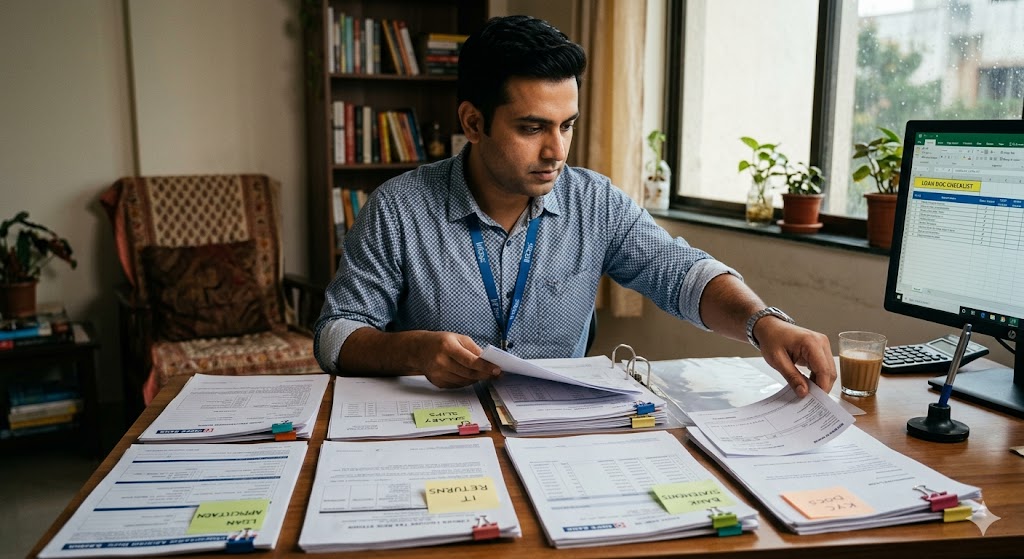
Applying for a personal loan has become easier than ever. However, many salaried employees still face delays because they do not know which papers are needed during the application process. Understanding the documents required for personal loan for salaried person can help you avoid rejection, save time, and improve your chances of faster approval.
Banks and NBFCs ask for documents to verify your identity, income, employment stability, and repayment ability. If your paperwork is complete and accurate, the lender can process your loan application more smoothly.
In this guide, you will learn all the important documents needed for a personal loan, why they matter, common mistakes to avoid, and useful tips for salaried applicants.
What Is a Personal Loan?
A personal loan is an unsecured loan offered by banks and financial institutions for personal expenses such as:
- Medical emergencies
- Home renovation
- Wedding expenses
- Travel
- Education
- Debt consolidation
Unlike home or car loans, personal loans usually do not require collateral or security. Because the lender takes more risk, proper documentation becomes very important.
If you are also planning to compare different loan types, you may read related guides on home loans and education loans on your website.
Why Lenders Ask for Documents
Before approving any loan, lenders want to check whether the applicant can repay the amount on time. Documents help them verify:
- Your identity
- Your residential address
- Monthly income
- Job stability
- Financial behavior
- Existing loan obligations
This process also helps prevent fraud and incorrect applications.
Documents Required for Personal Loan for Salaried Person
Below is a simple table showing the commonly required documents.
| Document Type | Examples |
|---|---|
| Identity Proof | Aadhaar Card, PAN Card, Passport |
| Address Proof | Utility bill, Rental agreement, Voter ID |
| Income Proof | Salary slips, Form 16, Income Tax Returns |
| Employment Proof | Employee ID card, Offer letter |
| Bank Statements | Last 3–6 months bank statement |
| Photographs | Passport-size photographs |
Different lenders may ask for slightly different documents depending on the loan amount and applicant profile.
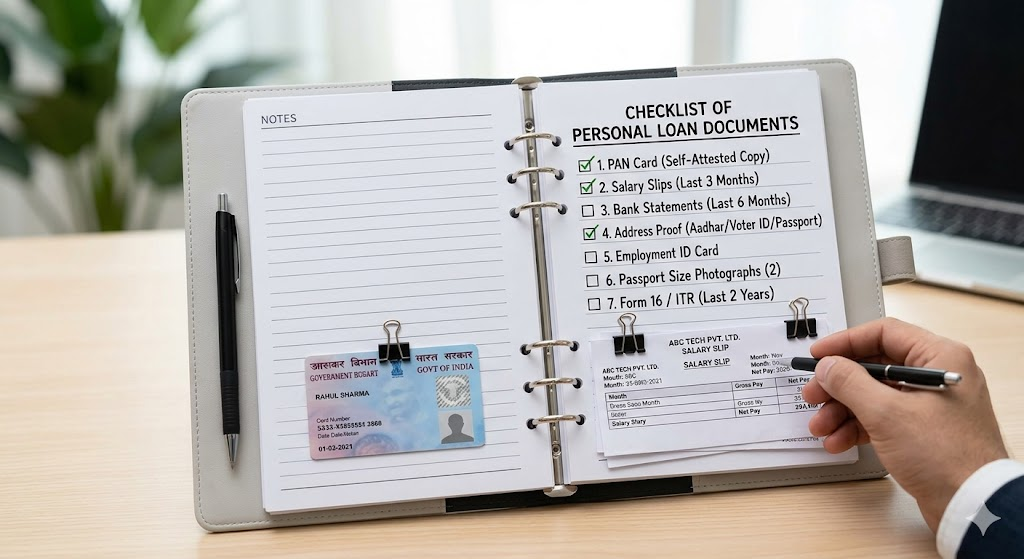
Identity Proof Documents
Identity proof confirms who you are. It is one of the first things lenders check.
Common Identity Proof Documents
- Aadhaar Card
- PAN Card
- Passport
- Driving Licence
- Voter ID Card
Why PAN Card Is Important
Most banks require a PAN card because it helps them verify your financial history and credit profile.
Important Tip
Make sure the name on all documents matches exactly. Even small spelling differences can delay the loan process.
Address Proof Documents
Banks also need proof of your current residential address.
Accepted Address Proof Documents
- Aadhaar Card
- Electricity bill
- Water bill
- Gas connection bill
- Passport
- Rental agreement
- Voter ID
Usually, utility bills should not be older than 2–3 months.
If You Live in a Rented House
Many salaried employees stay in rented accommodation. In such cases, lenders may ask for:
- Rent agreement
- Recent utility bill
- Employer-issued address proof
Income Proof Documents
Income proof is one of the most important parts of a personal loan application.
It helps the lender understand:
- Your monthly salary
- Loan repayment capacity
- Financial stability
Salary Slips
Most banks ask for salary slips from the last 3 to 6 months.
Your salary slip shows:
- Basic salary
- Allowances
- Deductions
- Net salary
Bank Statements
Lenders usually ask for bank statements from the last 3 to 6 months where your salary is credited.
They check:
- Salary consistency
- Existing EMIs
- Spending habits
- Account balance trends
Form 16
Form 16 is issued by employers and contains details of salary and tax deducted.
It acts as additional proof of stable employment and income.
Income Tax Returns (ITR)
Some lenders may also ask for ITR documents, especially for higher loan amounts.
Employment Proof Documents
Since you are applying as a salaried employee, lenders want proof of employment.
Common Employment Proof Documents
- Employee ID card
- Appointment letter
- Offer letter
- Experience letter
- HR confirmation
Why Job Stability Matters
Applicants with stable jobs usually receive better loan offers and lower interest rates.
For example:
- A person working in the same company for 3 years may get easier approval compared to someone who changed jobs recently.
Bank Statement Requirements
Bank statements are extremely important during loan verification.
What Lenders Check in Bank Statements
- Regular salary credits
- Existing loan EMIs
- Credit card payments
- Returned cheque history
- Minimum balance maintenance
Important Things to Remember
Avoid these issues before applying:
- Multiple cheque bounces
- Frequent low balances
- Too many cash withdrawals
- Heavy gambling or risky transactions
These activities may negatively affect loan approval.
Additional Documents Some Lenders May Ask
Depending on the bank and loan amount, additional papers may be required.
Possible Additional Documents
- Passport-size photographs
- Company address proof
- Credit card statement
- Existing loan statement
- Latest increment letter
For high-value loans, lenders may ask for more detailed financial records.
Online vs Offline Document Submission
Today, many lenders offer fully digital personal loan applications.
Online Document Submission
You can upload scanned copies through:
- Bank websites
- Mobile banking apps
- Loan platforms
Benefits of Online Submission
- Faster processing
- Less paperwork
- Easy tracking
- Convenient from home
Offline Submission
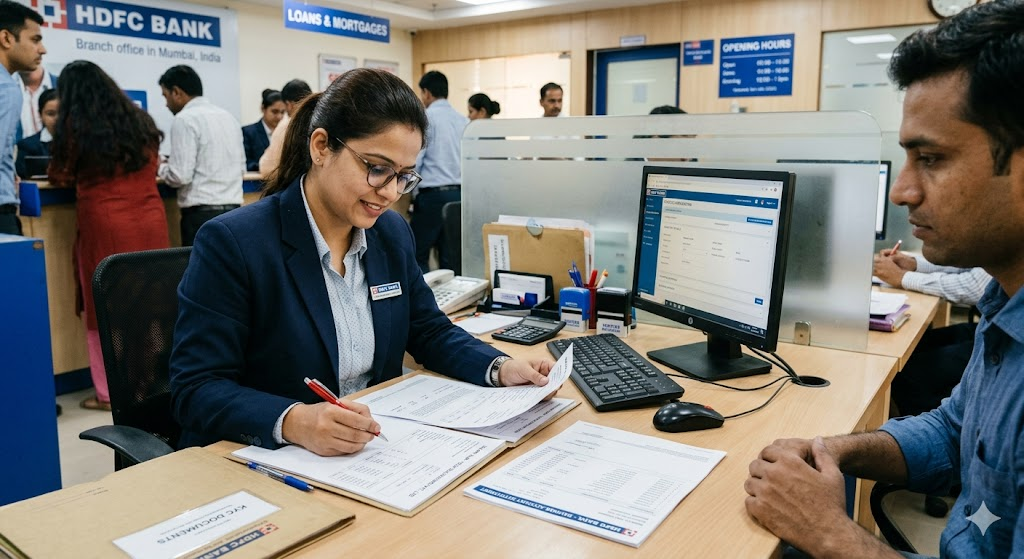
Some people still prefer visiting the branch physically.
In offline applications, you may need:
- Self-attested photocopies
- Original documents for verification
Common Mistakes to Avoid
Many loan applications get delayed because of small mistakes.
1. Uploading Blurry Documents
Always upload clear and readable copies.
2. Mismatched Signatures
Your signature should match bank records and ID proof.
3. Incorrect Salary Information
Never provide false salary details.
4. Ignoring Credit Score
A poor credit score may reduce approval chances.
You can also read your website’s article on improving credit scores for better loan eligibility.
5. Applying to Too Many Lenders
Submitting many applications together may affect your credit profile.
Tips to Improve Personal Loan Approval
Here are some practical tips that can help salaried employees.
Maintain a Good Credit Score
A score above 750 is generally considered good.
Keep Existing EMIs Low
Lower debt improves repayment capacity.
Submit Complete Documents
Incomplete paperwork is one of the biggest reasons for delays.
Show Stable Employment
Longer work experience improves lender confidence.
Apply for the Right Loan Amount
Choose a loan amount based on your income and repayment ability.
You may also explore banking and finance guides on EMI calculations and loan repayment planning.
Pros and Cons of Personal Loans
Pros
- No collateral required
- Fast processing
- Flexible usage
- Simple documentation
- Fixed repayment schedule
Cons
- Higher interest rates compared to secured loans
- Late payment penalties
- Can affect credit score if EMIs are missed
- Easy borrowing may lead to unnecessary debt
How Long Does Personal Loan Verification Take?
The verification process usually takes:
| Application Type | Approximate Time |
|---|---|
| Online Application | 1–3 working days |
| Offline Application | 3–7 working days |
Processing time depends on:
- Document accuracy
- Credit score
- Employer verification
- Loan amount
Conclusion
Understanding the documents required for personal loan for salaried person can make the loan application process much easier. Most lenders mainly ask for identity proof, address proof, salary slips, bank statements, and employment documents.
Before applying, make sure all your documents are updated, clear, and accurate. This not only improves your chances of approval but also helps avoid unnecessary delays.
Personal loans can be useful during financial emergencies, but it is important to borrow responsibly and choose an EMI that fits your monthly budget.
Read Also: How to Check Personal Loan Eligibility Before Applying
FAQs
1. Which documents are mandatory for a personal loan?
Usually, lenders require PAN card, Aadhaar card, salary slips, bank statements, and address proof.
2. How many months of salary slips are required?
Most banks ask for salary slips from the last 3 to 6 months.
3. Can I get a personal loan without Form 16?
Yes, some lenders may approve loans based on salary slips and bank statements alone.
4. Is a bank statement necessary for a personal loan?
Yes, bank statements help lenders verify salary credits and repayment ability.
5. Does a low credit score affect personal loan approval?
Yes, a poor credit score may reduce approval chances or increase interest rates.