
Buying a home is a big financial step. For many people, taking a home loan makes this dream possible. However, before a bank approves your loan, you usually need to pay a part of the property price yourself. This amount is called the down payment.
Many first-time home buyers ask, “How Much Down Payment Is Needed for a Home Loan?” The answer depends on several factors such as property value, lender rules, your income, and your credit profile.
In this guide, you will learn how home loan down payments work, how much you may need, ways to arrange the amount, and common mistakes to avoid. This beginner-friendly article will help you understand the process clearly before applying for a home loan.
What Is a Down Payment in a Home Loan?
A down payment is the amount you pay from your own savings when buying a property. The remaining amount is financed through a home loan from a bank or housing finance company.
For example, if a house costs ₹50 lakh and the lender approves a loan of ₹40 lakh, you must pay the remaining ₹10 lakh yourself. This ₹10 lakh is your down payment.
In simple words:
Down Payment = Property Price – Loan Amount Approved
Banks do not usually finance 100% of the property value because they want the buyer to share financial responsibility.
How Much Down Payment Is Needed for a Home Loan?
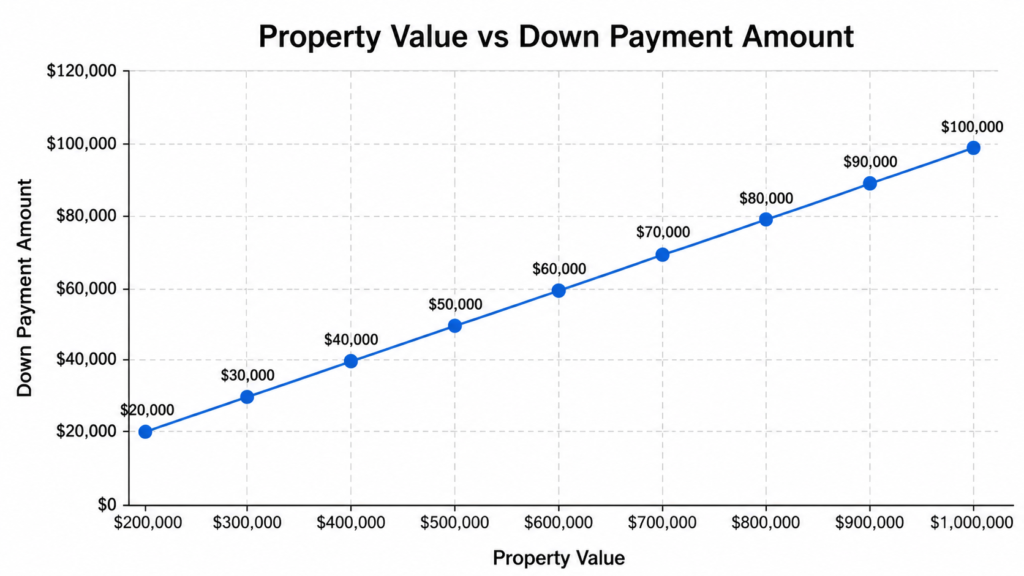
The down payment required for a home loan usually ranges between 10% and 25% of the property value.
Here is a simple table to understand this better:
| Property Value | Typical Loan Amount | Down Payment Needed |
|---|---|---|
| ₹20 lakh | ₹18 lakh | ₹2 lakh |
| ₹40 lakh | ₹32 lakh | ₹8 lakh |
| ₹60 lakh | ₹48 lakh | ₹12 lakh |
| ₹1 crore | ₹75–80 lakh | ₹20–25 lakh |
The exact amount depends on the lender’s Loan-to-Value ratio, also known as LTV.
Some banks may offer higher financing to borrowers with a strong income and good repayment history. However, buyers still need to cover registration charges, stamp duty, and other expenses separately.
Why Banks Ask for a Down Payment
Banks ask for a down payment to reduce lending risk. When buyers invest their own money, lenders feel more confident that the borrower will repay the loan responsibly.
Here are some reasons why down payments are important:
- Reduce risk for the lender
- Lower the loan amount
- Reduce monthly EMI burden
- Improve loan approval chances
- Show financial discipline
A higher down payment may also help you get better loan terms or lower interest rates in some cases.
Loan-to-Value (LTV) Ratio Explained
The Loan-to-Value ratio is the percentage of the property value that the lender agrees to finance.
For example:
- Property value: ₹50 lakh
- Loan approved: ₹40 lakh
LTV Ratio:
LTV=5040×100=80%
This means the borrower must arrange the remaining 20% as a down payment.
RBI Guidelines for Home Loan LTV
In India, lenders generally follow these limits:
| Property Cost | Maximum LTV Allowed |
|---|---|
| Up to ₹30 lakh | Up to 90% |
| ₹30 lakh to ₹75 lakh | Up to 80% |
| Above ₹75 lakh | Up to 75% |
These rules may vary slightly between lenders.
Example of Home Loan Down Payment
Let us understand with a practical example.
Suppose you want to buy a flat worth ₹70 lakh.
- Bank finances 80%
- Loan amount: ₹56 lakh
- Your contribution: ₹14 lakh
But your total upfront cost may be higher because you also need to pay:
- Stamp duty
- Registration charges
- Legal fees
- Interior expenses
- Moving costs
So, in reality, you may need around ₹17–18 lakh before buying the property.
This is why financial planning is very important before applying for a home loan.
Factors That Affect Down Payment Amount
Several factors decide how much down payment you may need.
1. Property Value
Higher-value properties often require larger down payments because banks reduce the LTV percentage for expensive homes.
2. Your Credit Score
A strong credit score shows good repayment behavior. Borrowers with higher scores may receive better loan offers.
If you want to improve your loan eligibility, you can also read about improving your credit profile in your website’s credit score section.
3. Income and Existing Debts
Banks check your monthly income and existing loan obligations. If you already have personal loans or credit card debt, the lender may reduce your loan amount.
You can naturally interlink here with an article about personal loans or debt management.
4. Type of Property
Ready-to-move properties and approved residential projects may receive better loan approval compared to under-construction properties.
5. Lender Policies
Different banks and housing finance companies have different risk policies. Some lenders may require a larger down payment than others.
Minimum Down Payment Rules in India
Most banks in India require at least:
- 10% for lower-value properties
- 20% for mid-range homes
- 25% or more for luxury properties
However, lenders may also evaluate:
- Employment stability
- Business income
- Age
- Credit history
- Savings pattern
Government housing schemes may also support eligible buyers with subsidies or easier financing options.
Pros and Cons of Paying a Higher Down Payment
Before deciding your down payment amount, it is important to understand both advantages and disadvantages.
Pros
Lower EMI
A smaller loan means lower monthly payments.
Less Interest Burden
You pay less total interest over the loan tenure.
Faster Loan Approval
Banks may view your application more positively.
Better Financial Stability
Lower debt gives more financial flexibility in the future.
Cons
Savings Get Reduced
Using most of your savings for the down payment may leave little emergency money.
Delayed Investments
Large upfront payments can affect other financial goals.
Liquidity Issues
You may face difficulty handling unexpected expenses after buying the property.
Ways to Arrange Your Down Payment
Saving for a down payment can take time, especially for first-time buyers. Here are some common ways people arrange funds.
Use Personal Savings
This is the safest option. Regular monthly savings can help build the required amount slowly.
Fixed Deposits or Investments
Some buyers use matured investments, mutual funds, or fixed deposits.
Family Support
In some cases, parents or family members help with the down payment.
Bonuses or Incentives
Annual bonuses or business profits may help cover part of the amount.
Government Schemes
Eligible buyers may receive support through affordable housing schemes.
However, avoid taking unnecessary debt just to arrange the down payment. Borrowing heavily before a home loan application may reduce your eligibility.
Common Mistakes to Avoid
Many home buyers make financial mistakes during the home loan process. Avoid these common issues.
Ignoring Extra Costs
People often calculate only the down payment and forget:
- Stamp duty
- Registration charges
- GST
- Brokerage
- Maintenance charges
Using All Savings
Do not empty your bank account completely. Keep emergency funds for medical or job-related situations.
Taking Multiple Loans
Too many loans can reduce your repayment ability.
Not Comparing Lenders
Interest rates and loan conditions vary between banks.
Ignoring Credit Score
A poor credit score can reduce loan approval chances or increase interest rates.
You can also explore your website’s banking and finance section for articles about improving financial planning before taking loans.
Tips for First-Time Home Buyers
Here are some useful tips if you are planning to buy your first property.
Start Saving Early
Even small monthly savings can build a good down payment fund over time.
Improve Your Credit Score
Pay credit card bills and EMIs on time.
Compare Home Loan Offers
Check:
- Interest rates
- Processing fees
- Prepayment charges
- Loan tenure
Calculate EMI Before Applying
Make sure the EMI fits comfortably within your monthly budget.
Keep Documents Ready
Banks usually ask for:
- PAN card
- Aadhaar card
- Income proof
- Bank statements
- Property documents
You can also read related guides on education loans and long-term financial planning if you are managing multiple future goals.
Read Also: Documents Required for First-Time Home Loan Applicants
Conclusion
Understanding How Much Down Payment Is Needed for a Home Loan? is important before buying a property. In most cases, buyers need to arrange around 10% to 25% of the property value from their own funds.
A higher down payment can reduce your EMI and total interest burden. However, it is also important to maintain emergency savings and avoid financial stress.
Before applying for a home loan, compare lenders carefully, improve your credit profile, and calculate all additional property costs. Good planning can make your home-buying journey smoother and more financially secure.
FAQs
1. What is the minimum down payment for a home loan in India?
Most banks require at least 10% to 20% of the property value as a down payment.
2. Can I get a 100% home loan?
Most lenders do not offer 100% financing for regular home purchases. Buyers usually need to contribute some amount themselves.
3. Is stamp duty included in the home loan?
Usually, stamp duty and registration charges are not fully covered by the home loan.
4. Does a higher down payment reduce EMI?
Yes. A larger down payment lowers the loan amount, which reduces your monthly EMI.
5. Can I use personal savings for a down payment?
Yes. Most buyers use savings, fixed deposits, investments, or family support for the down payment.