Getting admission to a college or university is an exciting step. However, many students and parents worry about arranging funds for tuition fees, hostel charges, books, and other educational expenses. This is where an education loan can help.
One common question students ask is: What is the best time to apply for education loan before admission?
The answer is important because applying too late can create unnecessary stress, while applying too early may lead to incomplete documentation. Understanding the right timeline can help ensure a smoother admission process and improve your chances of getting the loan approved on time.
In this guide, we will explain the ideal time to apply, the education loan process, important documents, common mistakes to avoid, and useful tips for first-time borrowers.
What Is an Education Loan?
An education loan is a type of financial assistance offered by banks and financial institutions to help students pay for higher education expenses.
These expenses may include:
- Tuition fees
- Examination fees
- Hostel fees
- Books and study materials
- Laptop or equipment costs
- Travel expenses for overseas education
- Other approved academic expenses
The student is usually the primary borrower, while a parent or guardian may act as a co-applicant.
Best Time to Apply for Education Loan Before Admission
The best time to apply for education loan before admission is generally 2 to 4 months before the fee payment deadline or course start date.
This timeline gives you enough time to:
- Compare loan options from different lenders
- Gather required documents
- Complete verification procedures
- Resolve any documentation issues
- Receive sanction approval before admission deadlines
Many banks take several weeks to process an education loan application. Therefore, waiting until the last minute can create unnecessary pressure.
Ideal Timeline
| Stage | Recommended Time |
|---|---|
| Research loan options | 4-6 months before admission |
| Gather documents | 3-4 months before admission |
| Submit loan application | 2-4 months before admission |
| Loan approval process | 2-8 weeks |
| Fee payment and disbursement | Before admission deadline |
Applying within this period helps avoid delays and allows you to focus on your studies instead of paperwork.
Why Timing Matters
Many students assume that getting admission first and arranging funds later is the best approach. However, that approach can sometimes lead to problems.
Avoid Last-Minute Delays
Banks often verify:
- Academic records
- Admission letters
- Income documents
- Co-applicant information
- Credit history
These checks take time.
Better Financial Planning
Applying early allows families to understand:
- Loan amount eligibility
- Interest rates
- Repayment terms
- Moratorium period
This helps in making informed decisions.
More Time to Compare Lenders
Different lenders may offer different benefits.
For example:
- Lower interest rates
- Flexible repayment options
- Faster processing
- Reduced processing fees
Applying early gives you time to compare offers carefully.
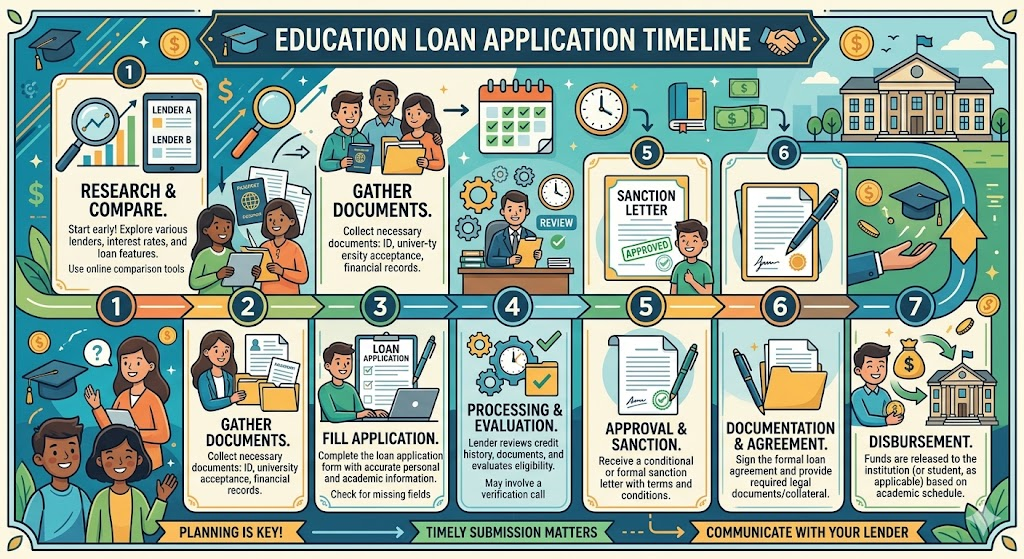
Education Loan Application Timeline
Understanding the typical loan journey can help students prepare better.
Step 1: Research Loan Options
Start by exploring:
- Public sector banks
- Private banks
- Non-banking financial companies (NBFCs)
Compare:
- Interest rates
- Processing fees
- Loan limits
- Repayment flexibility
This is also a good opportunity to learn about how lenders evaluate borrowers. A basic understanding of credit score concepts can help families prepare financially.
Step 2: Secure Admission Offer
Most lenders require:
- Admission confirmation
- Offer letter
- Provisional admission proof
Without admission-related documents, the application process may not move forward.
Step 3: Gather Documents
Collect all necessary documents beforehand.
Having complete paperwork can significantly reduce processing time.
Step 4: Submit Application
Apply as early as possible once the admission documents become available.
Many lenders now allow online applications.
Step 5: Verification and Approval
The lender reviews:
- Student profile
- Academic background
- Course details
- Institution reputation
- Co-applicant financial profile
Step 6: Loan Sanction
Once approved, the lender issues a sanction letter detailing:
- Loan amount
- Interest rate
- Terms and conditions
Step 7: Loan Disbursement
Funds are generally released according to the institution’s fee schedule.
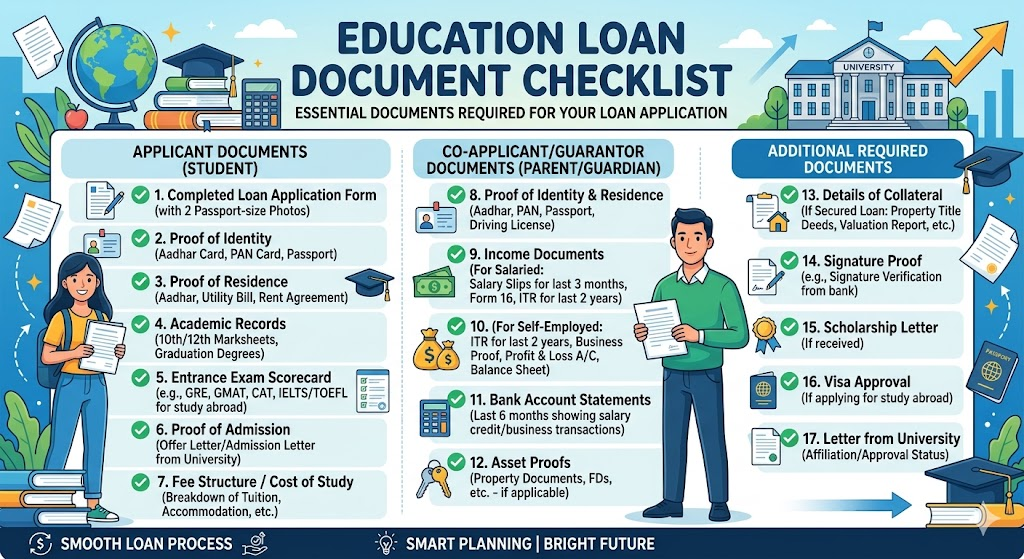
Documents Required for Education Loans
Requirements may vary slightly among lenders, but common documents include:
Student Documents
- Identity proof
- Address proof
- Passport-sized photographs
- Academic mark sheets
- Entrance exam scores
- Admission letter
Co-Applicant Documents
- Identity proof
- Address proof
- Income proof
- Salary slips
- Bank statements
- Income tax returns
Course-Related Documents
- Fee structure
- Admission confirmation
- Course details
Preparing these documents early can help prevent delays.
Factors That Affect Loan Approval Time
Not every education loan application is processed at the same speed.
Several factors influence approval timelines.
Completeness of Documents
Missing paperwork is one of the most common reasons for delays.
Institution Recognition
Loans for recognized institutions are often processed faster.
Loan Amount
Larger loan amounts may require additional verification.
Co-Applicant Profile
A financially stable co-applicant can support a smoother approval process.
Credit History
Lenders may review the credit history of the co-applicant. Maintaining healthy financial records can be beneficial.
Pros and Cons of Applying Early
Pros
- More time to compare lenders
- Reduced stress before admission
- Faster fee payment planning
- Better preparation of documents
- Lower risk of missing deadlines
Cons
- Admission details may still be pending
- Some documents may need updating later
- Course plans could change unexpectedly
For most students, the benefits of applying early outweigh the disadvantages.
Practical Example
Imagine a student receives a university admission offer in June.
The course starts in August.
A smart timeline could be:
- April: Research lenders
- May: Prepare documents
- June: Receive admission letter
- June-July: Submit loan application
- July: Receive approval
- August: Loan disbursement and admission completion
This schedule leaves enough time to handle any unexpected issues.
Common Mistakes to Avoid
Many students make avoidable mistakes during the loan process.
Waiting Until the Last Week
This is perhaps the biggest mistake.
Unexpected delays can occur at any stage.
Ignoring Eligibility Requirements
Always check:
- Age criteria
- Eligible courses
- Approved institutions
- Co-applicant requirements
Submitting Incomplete Documents
Even one missing document can delay approval.
Not Comparing Loan Options
Never accept the first offer without comparing alternatives.
Overlooking Repayment Terms
Focus on more than just interest rates.
Review:
- Repayment tenure
- Moratorium period
- Processing fees
- Prepayment policies
Helpful Tips for Students and Parents
Start Planning Early
Begin researching financing options several months before admission.
Keep Digital Copies Ready
Store scanned copies of important documents for quick submission.
Understand Your Budget
Borrow only what is necessary.
A realistic borrowing amount can make repayment easier later.
Stay Organized
Create a checklist for:
- Documents
- Deadlines
- Admission requirements
- Loan application status
Improve Financial Awareness
Learning basic concepts related to banking and finance can help students make better borrowing decisions throughout their educational journey.
Additionally, understanding how lenders evaluate applications can also be useful when considering future borrowing needs such as personal loans or even long-term goals like home loans after graduation.
Conclusion
Choosing the best time to apply for education loan before admission can make the entire admission process smoother and less stressful. In most cases, applying around 2 to 4 months before your fee payment deadline or course start date provides enough time for document preparation, lender verification, approval, and disbursement.
Early planning allows students and parents to compare lenders, understand loan terms, and avoid last-minute complications. By preparing documents in advance and staying organized, you can increase the likelihood of a smooth education loan experience and focus on what truly matters—your education and future career goals.
Frequently Asked Questions (FAQs)
1. Can I apply for an education loan before receiving final admission?
Some lenders may accept provisional admission documents, but most require proof of admission before final approval.
2. How long does an education loan approval usually take?
Approval times vary by lender and application complexity. It may take anywhere from a few days to several weeks.
3. Is it better to apply early for an education loan?
Yes. Applying early gives you more time to complete documentation, compare lenders, and avoid admission-related delays.
4. Can a loan be sanctioned before fee payment is due?
Yes. Many students receive loan sanction letters before the fee payment deadline, allowing timely fund arrangements.
5. What happens if my education loan is delayed?
You may face difficulties meeting admission or fee payment deadlines. This is why early application is strongly recommended.
Read Also: Education Loan Repayment Process Explained Simply